LIMNMEDIA - Tilt Drive Fitment & Off-the-Shelf Constraints
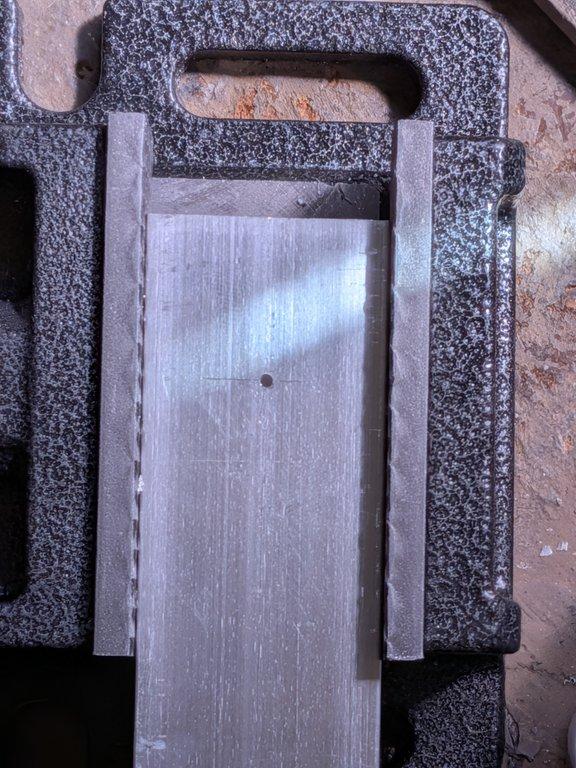
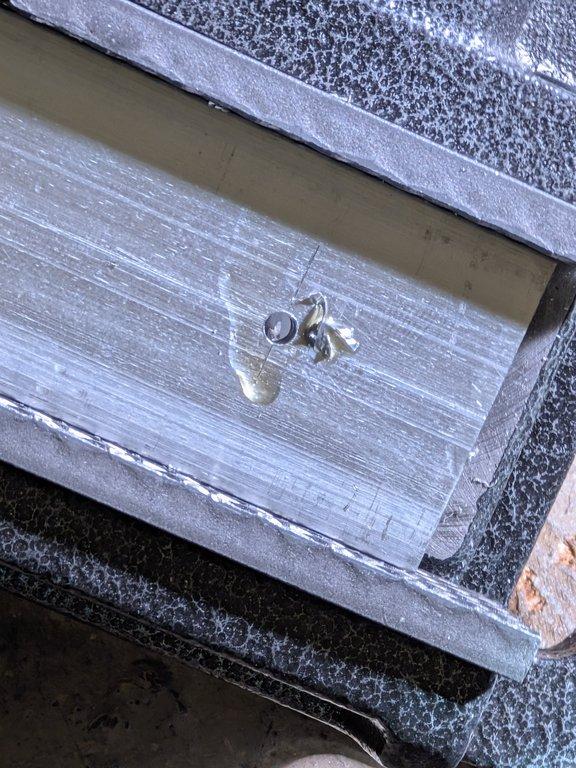
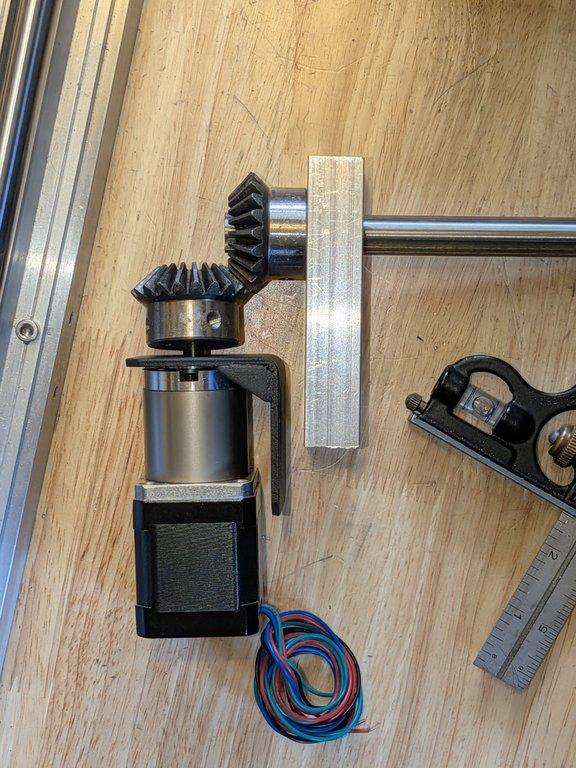
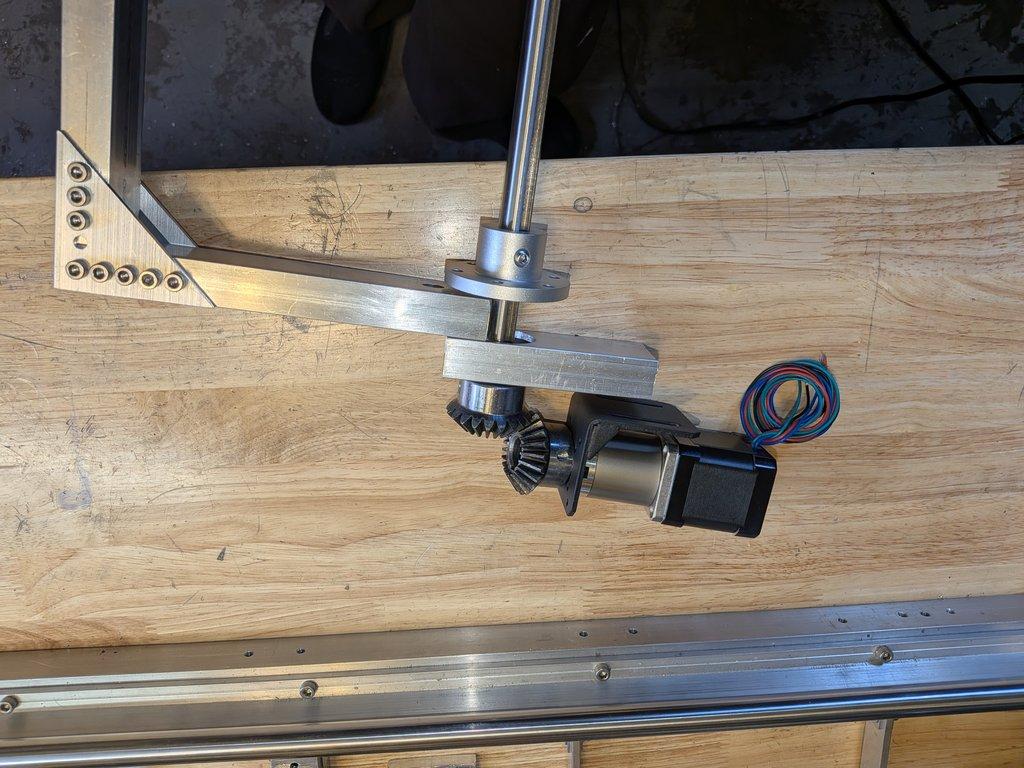
This set of images shows the fitting and layout work for the tilt drive components on the LIMNMOCO stop-motion crane.
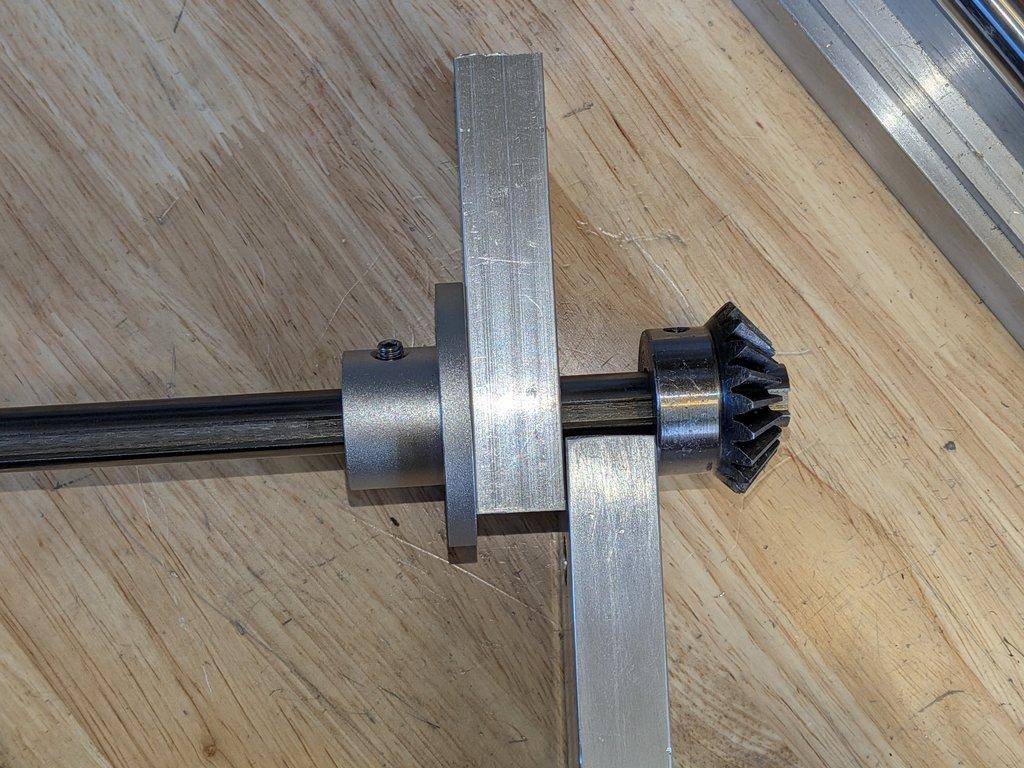
The tilt system uses an off-the-shelf miter gear set to transfer rotation through the tilt arm. After a lot of searching, the smallest keyed gear set I could find at a reasonable cost still used a 14mm shaft — significantly larger than what would ideally fit this scale of motion control system.
That oversized shaft becomes part of the design problem.
)
Working With What Exists
This is one of the recurring realities in the LIMNMOCO build and in stop-motion engineering generally: balancing cost, availability, and function.
Custom machined components would solve many of these issues immediately, but they also push the system further away from accessibility.
)
At the same time, this process naturally reveals which components would benefit most from custom LIMNMEDIA-designed parts in the future.
That’s part of the long-term direction:
- open hardware foundations
- with refined components available for builders who want them
)
Hole Fitment & Reality
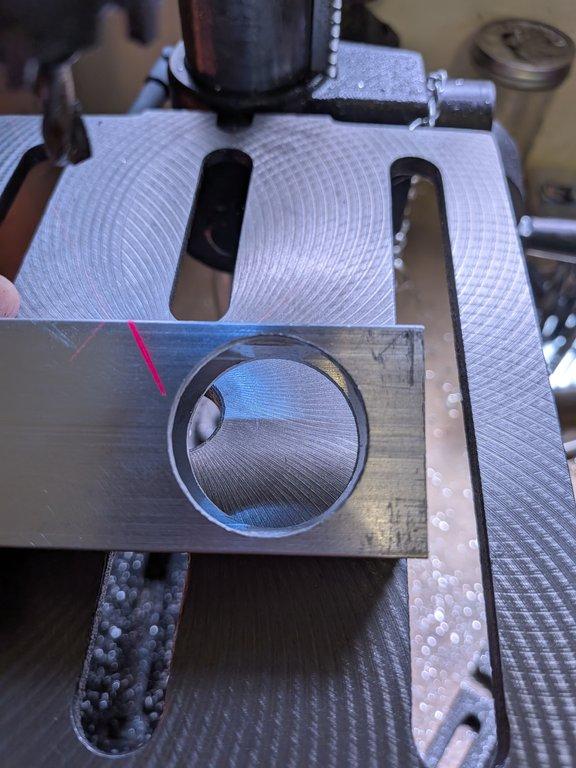
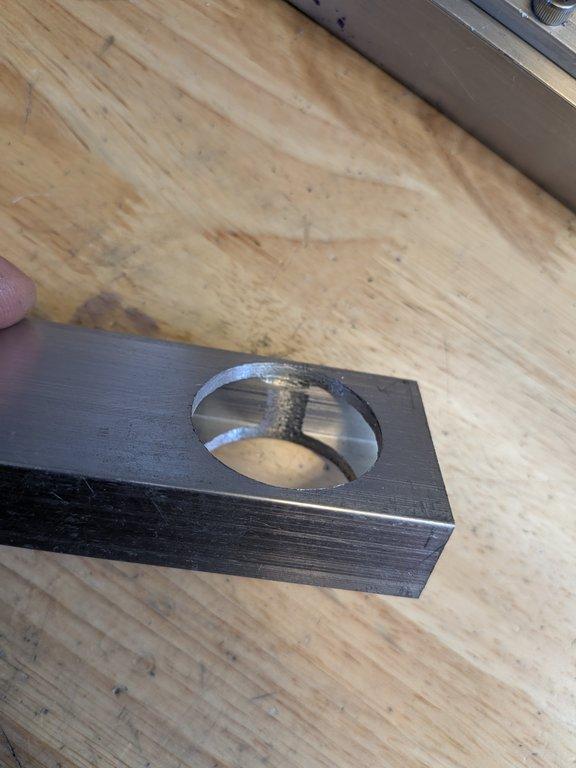
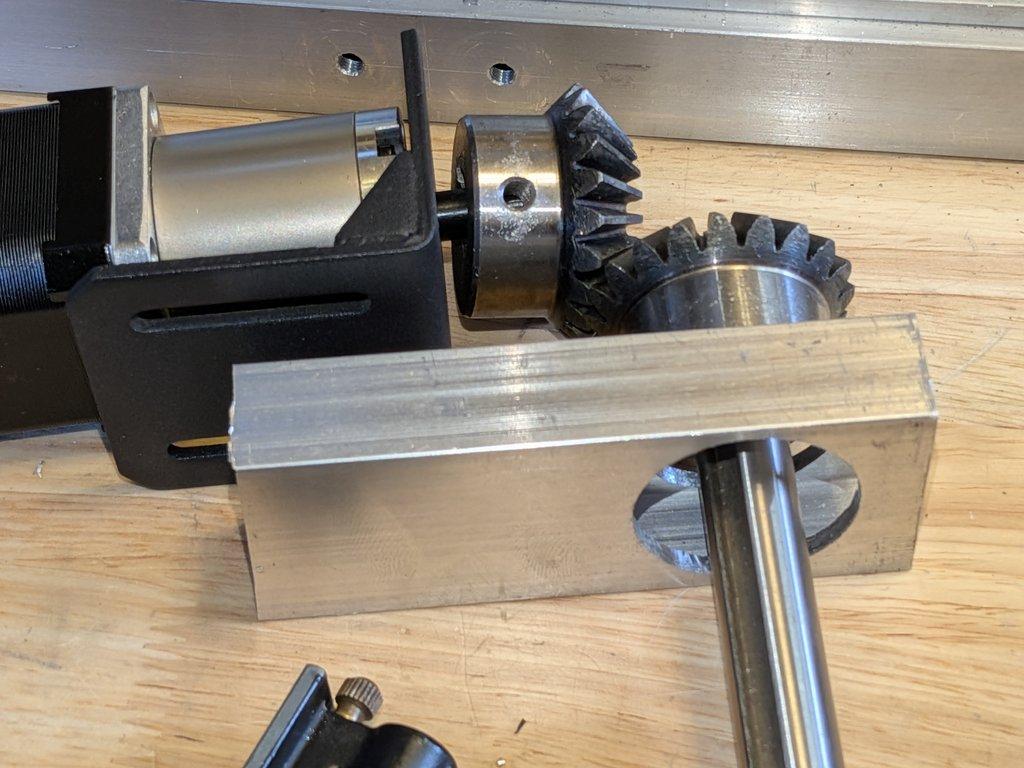
You can see in the images that the large hole drilled into the rectangular aluminum tilt arm slightly breaks into the inside wall of the tube.
This was a difficult hole to make cleanly.
)
The tube had to be clamped very securely in the vise to keep it from chattering while using the hole saw. Once the saw starts vibrating or walking, the cut quality drops quickly.
And then there’s the bearing fit.

The bearing requires a fairly precise hole size, but with this setup and tooling, achieving a machine-perfect bore simply isn’t realistic.
So the process becomes less about pretending the limitation doesn’t exist, and more about finding practical ways to work with it.
Later posts will show how that problem gets solved.
)
Notes
This is another example of the LIMNMOCO stop-motion crane defining itself through constraints.
The system continuously reveals:
- where precision matters most
- where compromise is acceptable
- and where future custom solutions will have the biggest impact
That feedback loop is part of developing an open hardware motion control system that remains both accessible and capable.
)
Why This Matters
In stop-motion cinematography, controlled camera movement depends on the physical system behaving consistently.
)
That consistency does not come from perfection alone — it comes from understanding:
- the limitations of the tools
- the behavior of the materials
- and the compromises inside the system

Christopher Weinberg
Christopher Weinberg is the founder of LIMNMEDIA, where he develops motion control systems, production workflows, and educational tools focused on stop-motion and hybrid filmmaking. With over 15 years of experience in production, his work centers on making complex techniques more accessible through practical engineering and open development. He is currently building LIMNMOCO, a modular motion control system designed for flexible, real-world use.
No comments yet. Login to start a new discussion Start a new discussion