LIMNMEDIA - Swing Axis Motor Mount Plate
This stage is the start of the motor mount for the swing axis
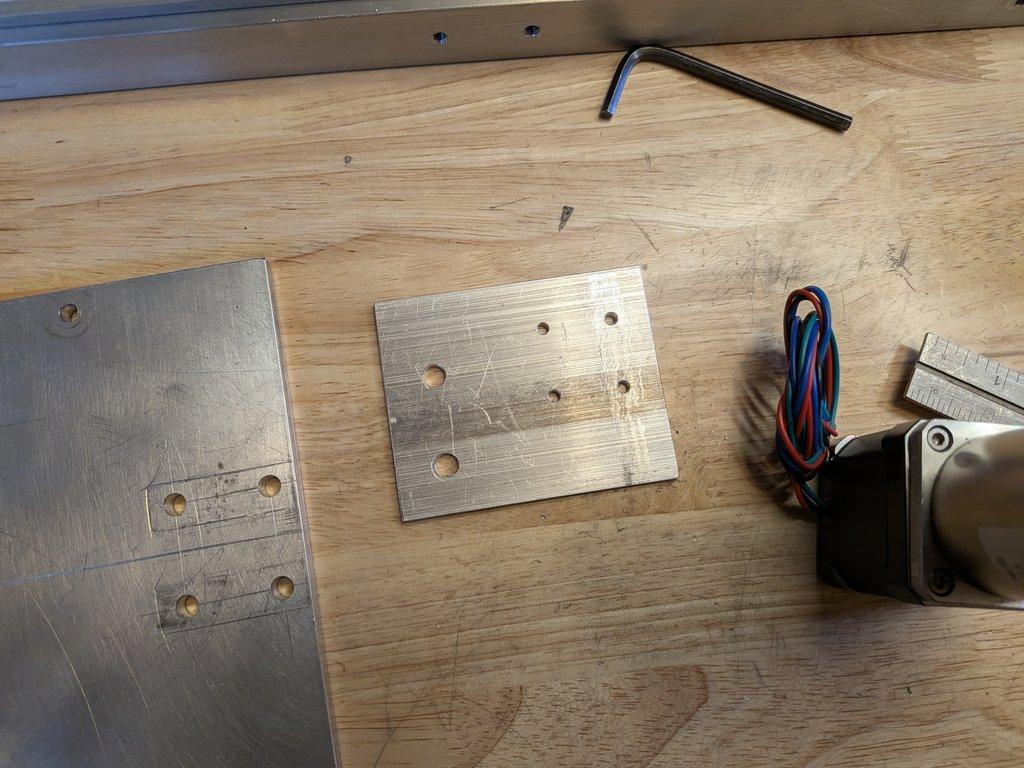
It begins simply enough—laying out and drilling a pair of 1/4-20 holes into the base plate—but this piece ends up doing more work than expected.
The mount itself is made from a thinner sheet of metal, forming the plate that will carry the swing motor.
⸻
Objective
The goal here is to establish a mounting interface for the swing motor that is:
- correctly positioned relative to the rotation stack
- aligned for future pulley and belt integration
- simple enough to adjust as the system evolves
⸻
Process
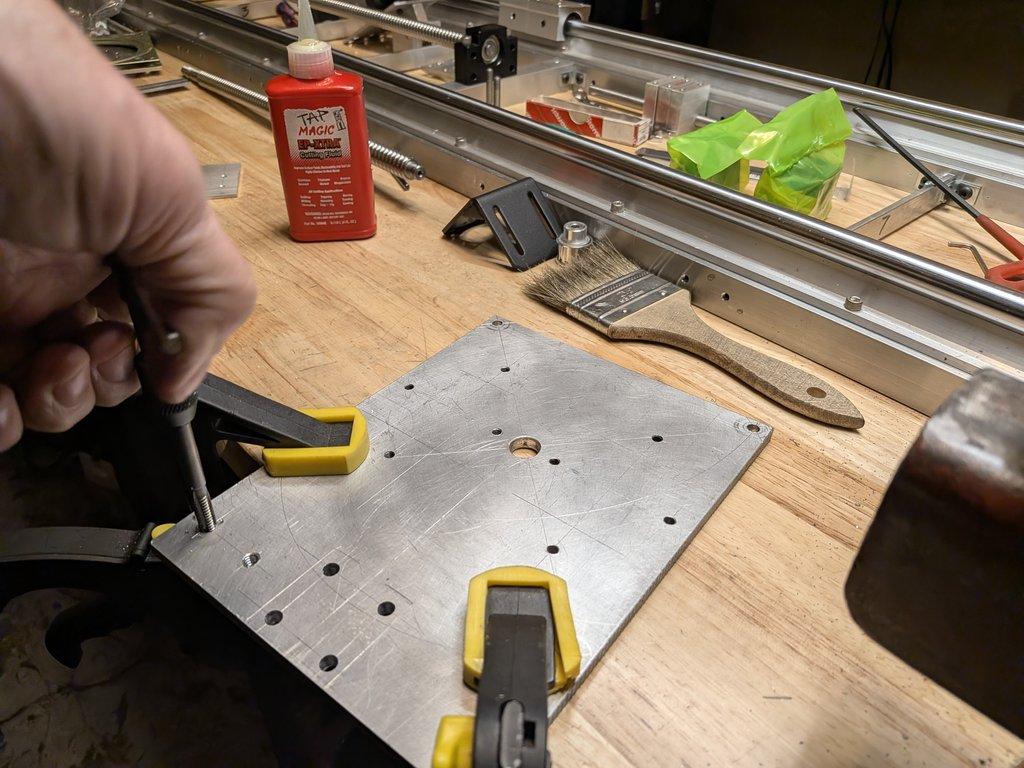
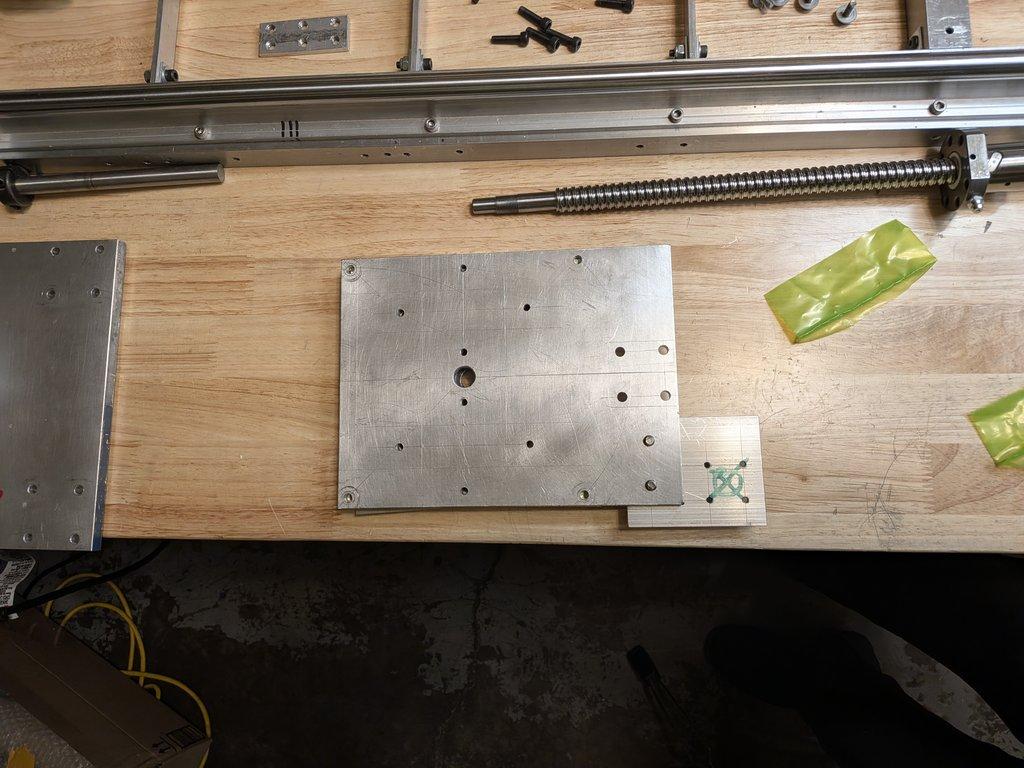
The base plate is marked out and drilled for two 1/4-20 mounting points. These holes define the initial position of the motor mount relative to the rotation axis.
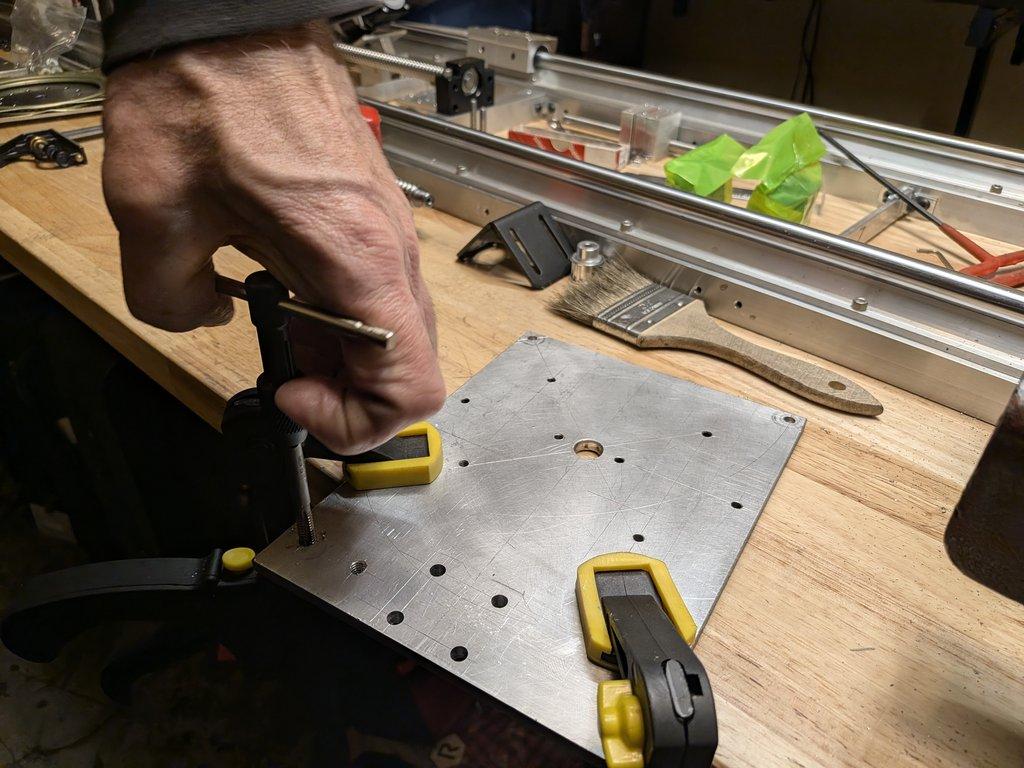
A thinner sheet of metal is then cut and prepared to act as the motor mount plate. This plate will bolt into those holes and serve as the adjustable surface for positioning the motor.
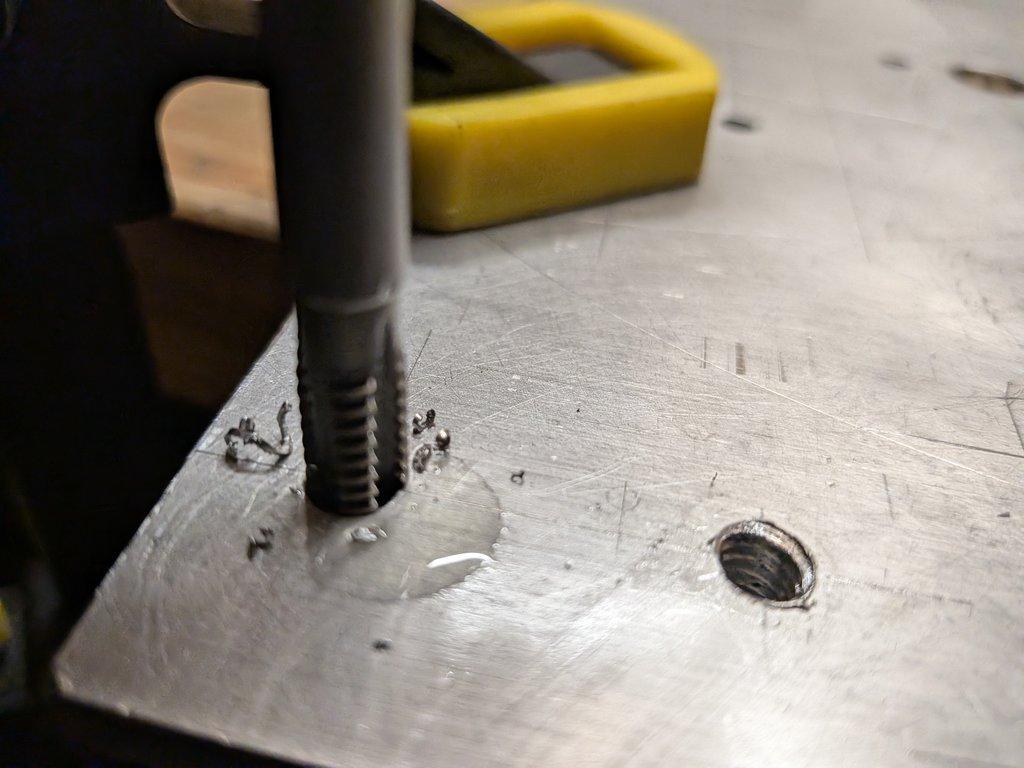
At this stage, it’s less about locking in a final design and more about establishing a working mount that can be refined as the belt system comes together.
⸻
Notes
This is one of those parts that seems straightforward at first, but quickly becomes more involved once everything starts interacting.
Hole placement matters more than it looks. Those two 1/4-20 holes define not just where the plate sits, but how much adjustment you’ll have later when aligning the motor to the pulley.
Again, this is destructive work. Once those holes are in the base plate, they’re in. So it’s worth taking the extra time to:
- check spacing
- check relation to the center axis
- think ahead to where the pulley and belt will need to sit
The thinner plate is intentional. It’s easier to work with, easier to modify, and gives some flexibility at this stage of the build. But that also means it may need reinforcement or revision later depending on how the loads behave.
And this is where that earlier idea shows up again: you’re not building the final part yet—you’re building the version that teaches you what the final part needs to be.
⸻
LIMNMOCO Context
This mount ties directly into the swing drive system, which will ultimately control rotation at the base.
The relationship between:
- motor position
- pulley alignment
- belt tension
…all starts here.
This plate becomes the interface between the motor and the rest of the crane, so even though it’s a relatively small component, it plays a big role in how the system comes together.
⸻
Why This Matters
Motor mounts are rarely “one and done,” especially in a prototype like this.
They tend to evolve as:
- alignment gets refined
- spacing changes
- real-world constraints show up
Starting with a simple plate gives you room to adjust, learn, and iterate without locking yourself into something too rigid too early.
And again, taking a little extra time before drilling pays off. It’s much easier to shift a layout line than it is to move a hole after the fact.

Christopher Weinberg
Christopher Weinberg is the founder of LIMNMEDIA, where he develops motion control systems, production workflows, and educational tools focused on stop-motion and hybrid filmmaking. With over 15 years of experience in production, his work centers on making complex techniques more accessible through practical engineering and open development. He is currently building LIMNMOCO, a modular motion control system designed for flexible, real-world use.
No comments yet. Login to start a new discussion Start a new discussion