LIMNMEDIA - Rotation Stage Detail & Upright Pilot Hole
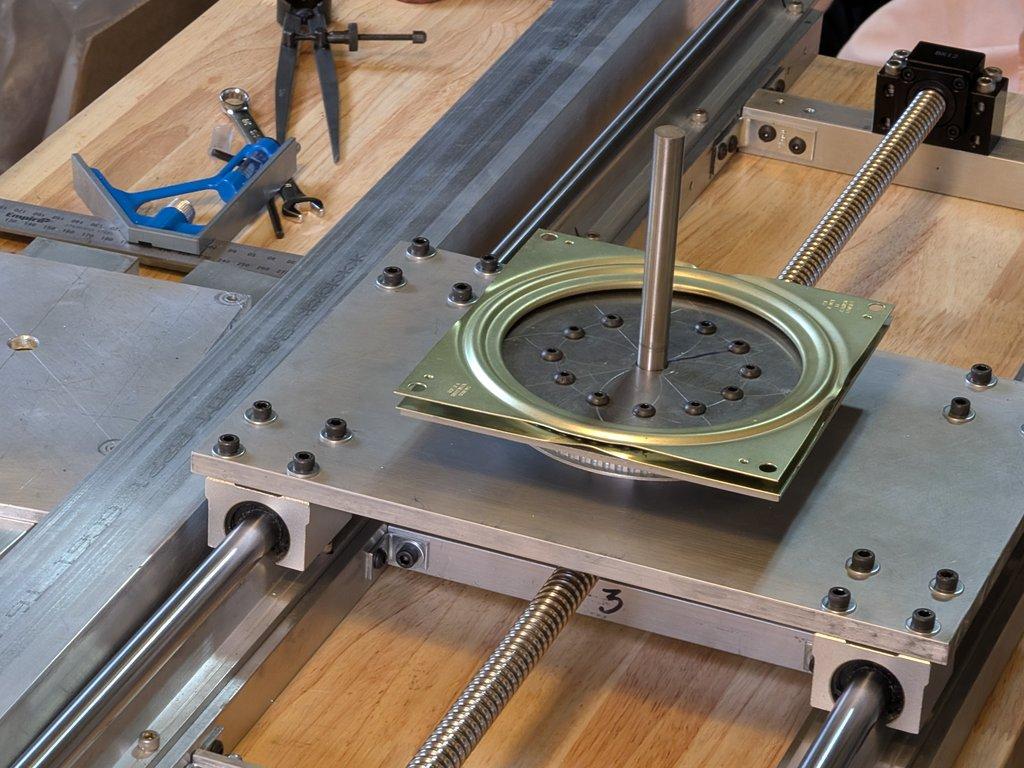
This set captures a clearer view of the lazy susan-style rotation stage in place, along with an important new feature on the top plate: the pilot hole for the upright support shaft.
This marks the transition from the base rotation system into the vertical structure of the crane.
Process
With the full stack assembled, the rotation stage is now visible as a distinct component within the system. The zinc-coated bearing sits between the adapter plate and the top plate, allowing the upper structure to rotate relative to the sled.
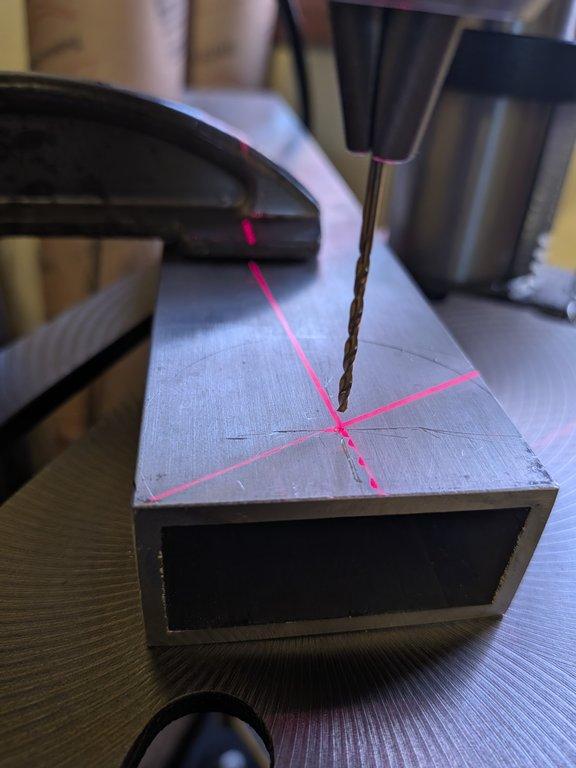
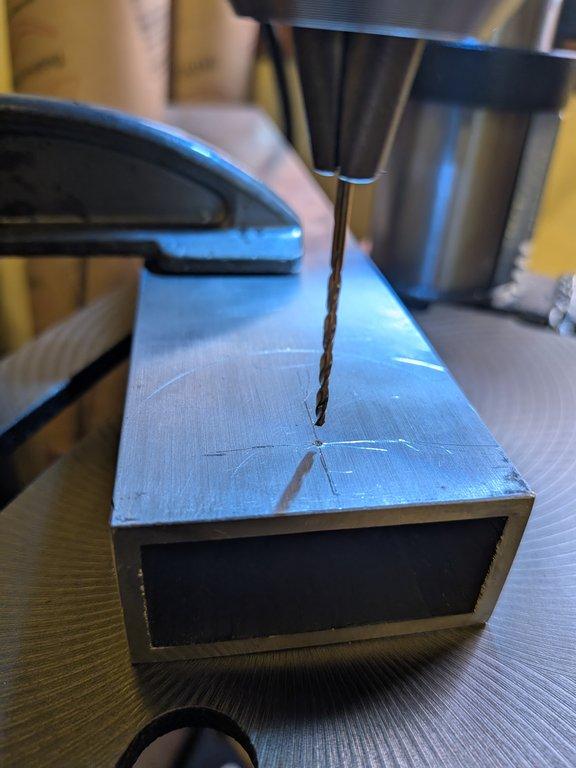
On the top plate, a pilot hole has been drilled to establish the center point for the upright shaft. This shaft will support the jib arm and define the vertical axis of the crane. The hole is still in its early stage—just a pilot—but it sets the position for all subsequent drilling, reaming, or fitting operations.
Notes
Seeing the bearing clearly in this stage helps confirm how it integrates into the stack. The contrast in material finish makes it easy to identify, and you can start to read how the load will transfer through it.
The pilot hole for the upright is more than just a starting point—it locks in the location of the crane’s vertical axis. Because it’s referenced from the same center used throughout the pulley and rotation stack, it keeps everything concentric.
As with earlier steps, starting with a clean, accurate pilot hole is critical. This is the reference that larger tools will follow, so any error here carries forward into the final fit of the shaft.
LIMNMOCO Context
This step introduces the next axis in the system:
- The rotation stage defines movement in the horizontal plane
- The upright shaft establishes the vertical structure
- The jib arm will extend from this point outward
Everything is now organizing around a shared center:
the rotation axis becomes the foundation for the entire crane geometry
Why This Matters
The upright shaft is the link between the base and the rest of the crane. If its position is off-center or misaligned, that error propagates into:
- arm balance
- motion arcs
- load distribution
Because the pilot hole is tied to the same center used for the pulley and bearing, it ensures that the vertical and rotational axes remain aligned. This is essential for smooth, predictable motion.

Christopher Weinberg
Christopher Weinberg is the founder of LIMNMEDIA, where he develops motion control systems, production workflows, and educational tools focused on stop-motion and hybrid filmmaking. With over 15 years of experience in production, his work centers on making complex techniques more accessible through practical engineering and open development. He is currently building LIMNMOCO, a modular motion control system designed for flexible, real-world use.
No comments yet. Login to start a new discussion Start a new discussion