LIMNMEDIA - Parallelogram Top Link & Yoke Bracket
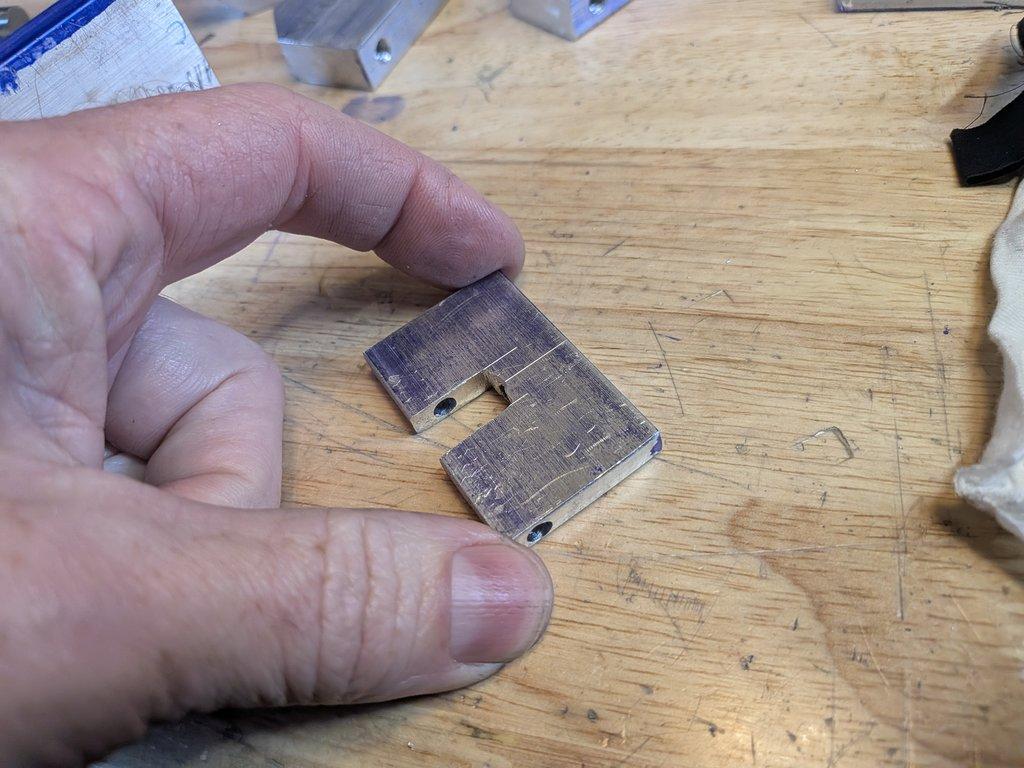
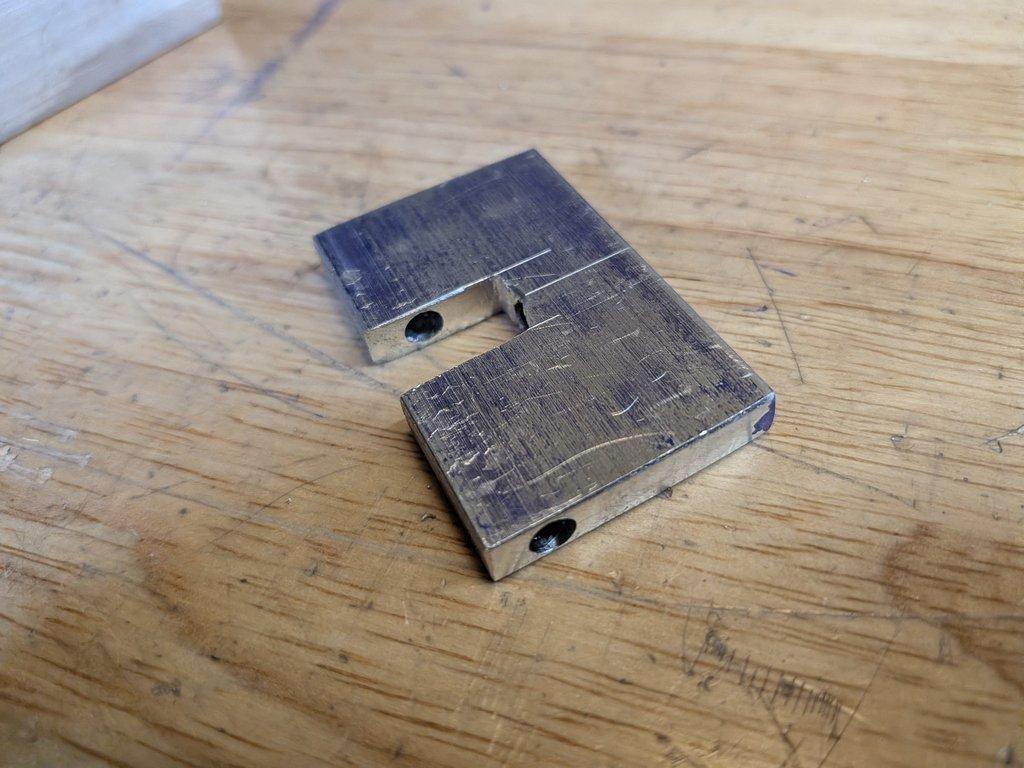
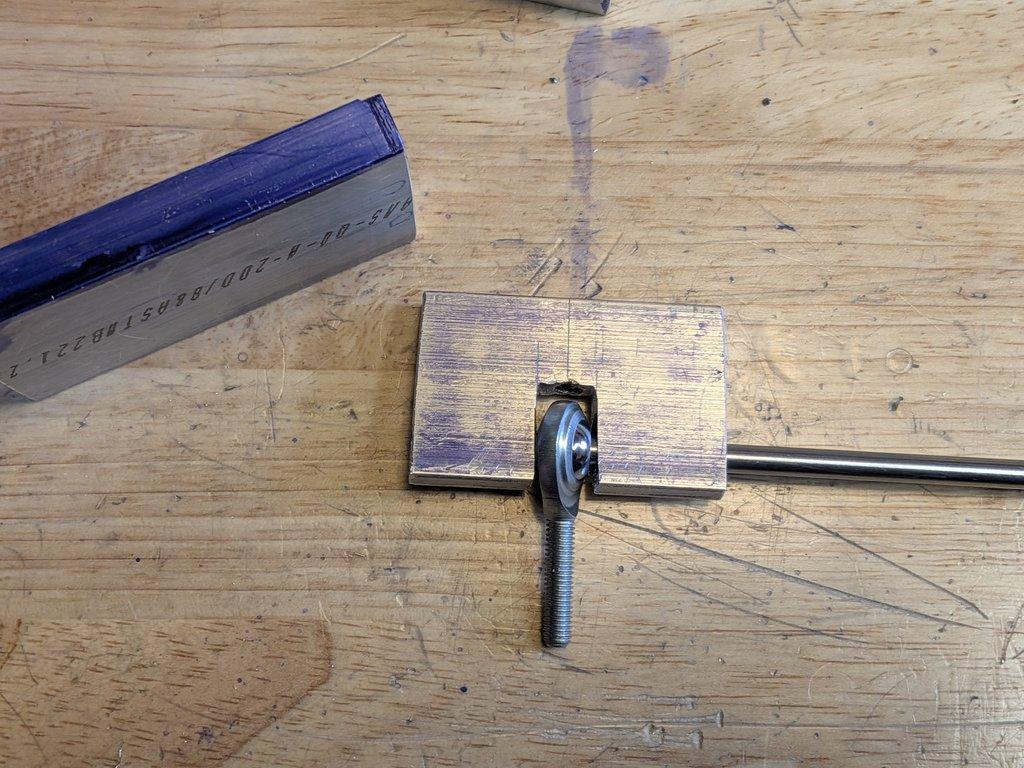
This stage focuses on a small yoke-style bracket that mounts an eyelet at the top end of the jib arm system.
This is part of the parallelogram linkage, not the primary structure. The main boom (the 2x2 support arm) carries the load, while this upper link controls the geometry of the system.
⸻
Process
The jib arm functions as a parallelogram:
- The lower member is the main boom, carrying the weight
- The upper member is a much lighter, parallel link
- Together, they maintain a consistent relationship as the arm moves
The yoke bracket holds a threaded eyelet with a swivel/pivot, allowing that upper link to connect cleanly while staying aligned through motion.
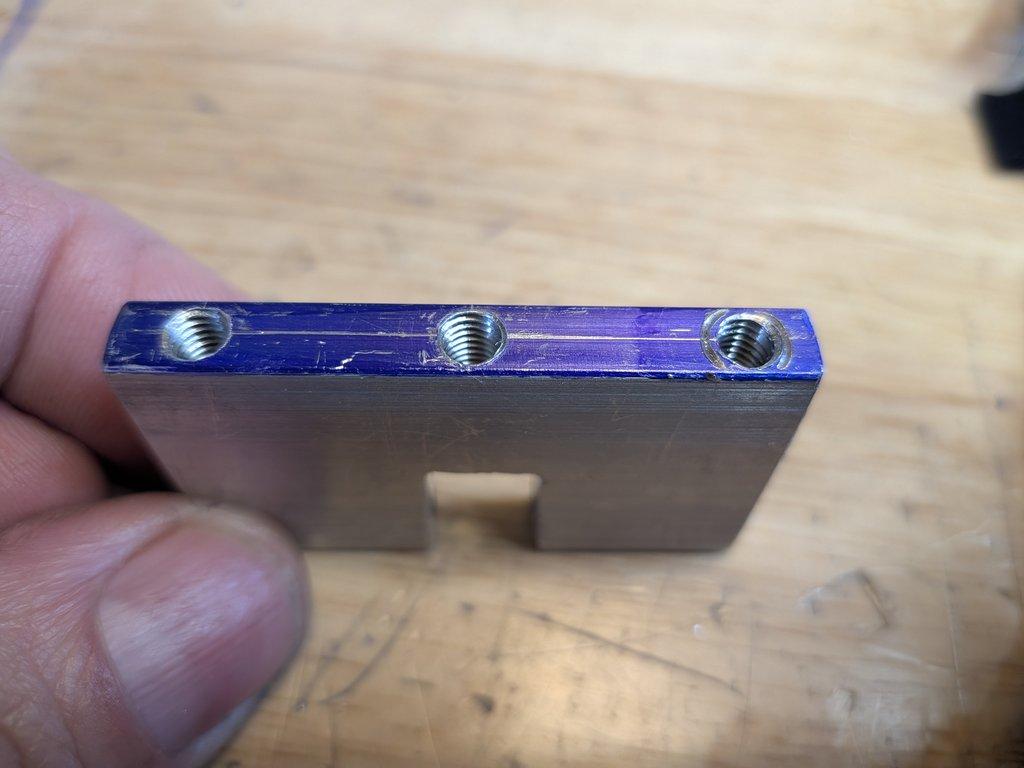
For the upper link itself, I built a simple turnbuckle-style tube:
- lightweight aluminum tubing
- inner diameter close to tap size
- tapped on both ends
- one end standard thread, one end reverse
This allows the length of the top link to be adjusted, which helps tune the parallelogram so the head behaves correctly as the boom raises and lowers.
⸻
Notes
This part is doing something important, but not in the way you might expect.
It’s not carrying the main load—that’s all handled by the boom. Instead, this piece is:
- maintaining alignment
- translating motion through the linkage
- allowing fine adjustment of the system geometry
Because of that, the loads here are mostly tension and rotational, not compression.
This is definitely a prototype-level solution. The thread size is small, and the strength is limited by those threads. It likely wouldn’t hold up under heavy compression, but that’s not its job in this system.
The upside is that it’s very easy to scale:
- larger tubing
- larger threads
- same overall design
So if testing shows it needs to be stronger, that’s a straightforward change.
⸻
LIMNMOCO Context
This is part of what allows the jib to behave like a proper camera crane.
The parallelogram linkage keeps the relationship between the boom and the head consistent, while the adjustable top link gives a way to tune that relationship.
The yoke bracket is a small but important piece—it puts that connection point in the right place relative to the main hinge so everything tracks correctly.
⸻
Why This Matters
This is a good example of separating structure from control.
- The boom carries the load
- The parallelogram controls the motion
Understanding that difference makes it easier to design each part for what it actually needs to do.
It also reinforces the approach of:
start simple, test it, and scale up only if needed

Christopher Weinberg
Christopher Weinberg is the founder of LIMNMEDIA, where he develops motion control systems, production workflows, and educational tools focused on stop-motion and hybrid filmmaking. With over 15 years of experience in production, his work centers on making complex techniques more accessible through practical engineering and open development. He is currently building LIMNMOCO, a modular motion control system designed for flexible, real-world use.
No comments yet. Login to start a new discussion Start a new discussion