LIMNMEDIA - Boom Motor Mount & Spacer Fitment
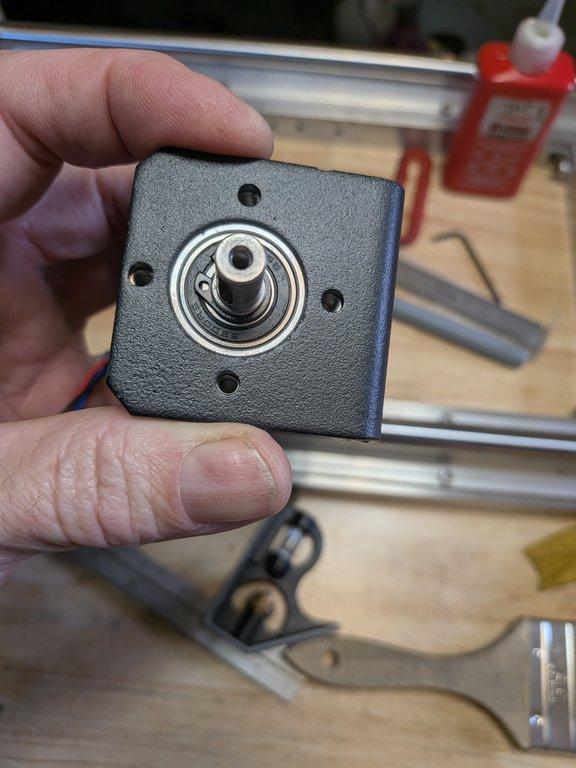
This stage brings in the boom drive motor and starts tying it physically into the system.
At the same time, a small but important detail shows up: the need to match shaft heights between the motor, the ball screw, and the pivot assembly.
That’s where the spacer comes in.
⸻
Objective
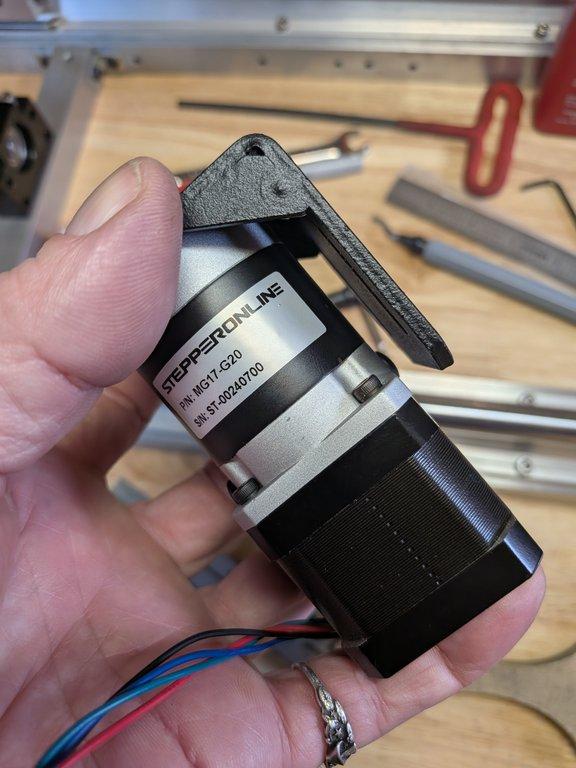
The goal here is to mount the boom motor to the adapter plate and align it with the ball screw so everything runs true. That includes fabricating a spacer for the ball screw bearing block so the shafts sit on the same axis.
⸻
Process
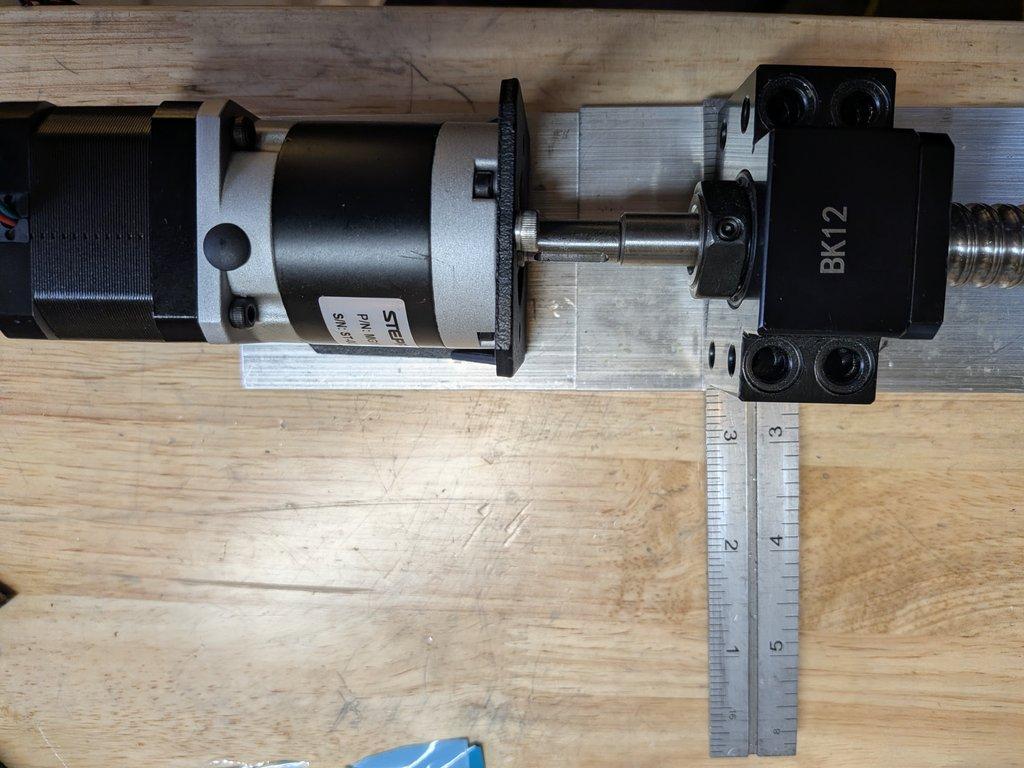
The motor is mounted to the adapter plate that’s already tied into the pivot assembly. From there, the relationship between the motor shaft and the ball screw becomes very clear—they need to line up cleanly, or nothing is going to feel right.
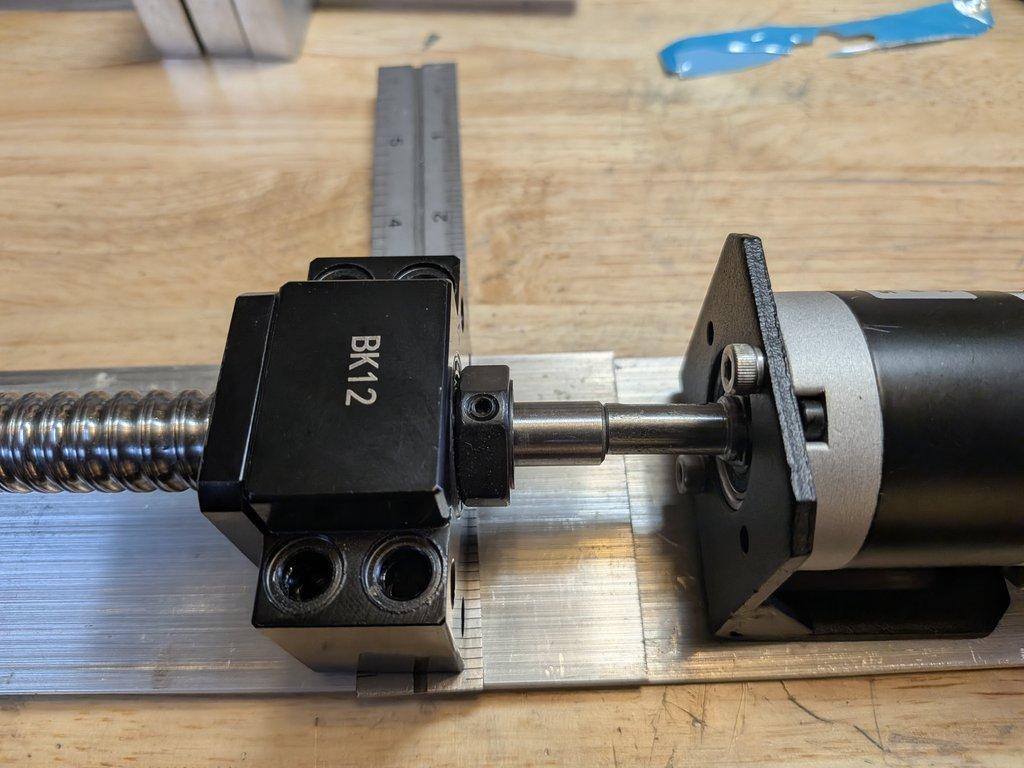
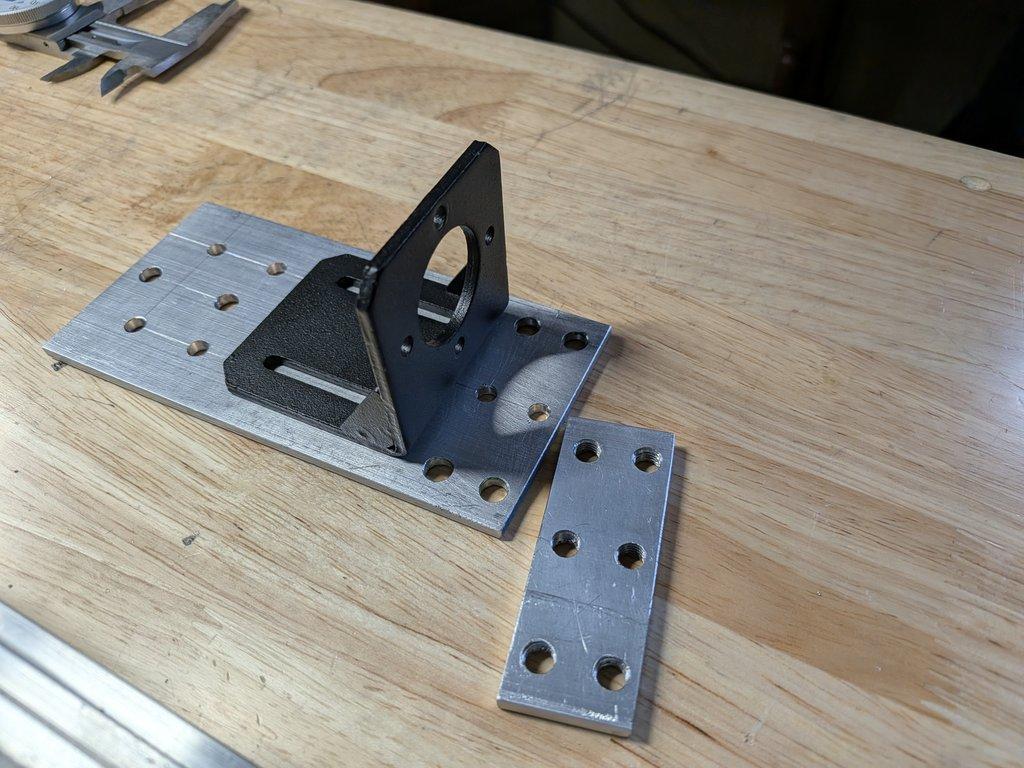
Once everything is mocked up, the mismatch in height shows up immediately. The ball screw bearing block sits slightly off relative to the motor, so a spacer is made to bring it into alignment.
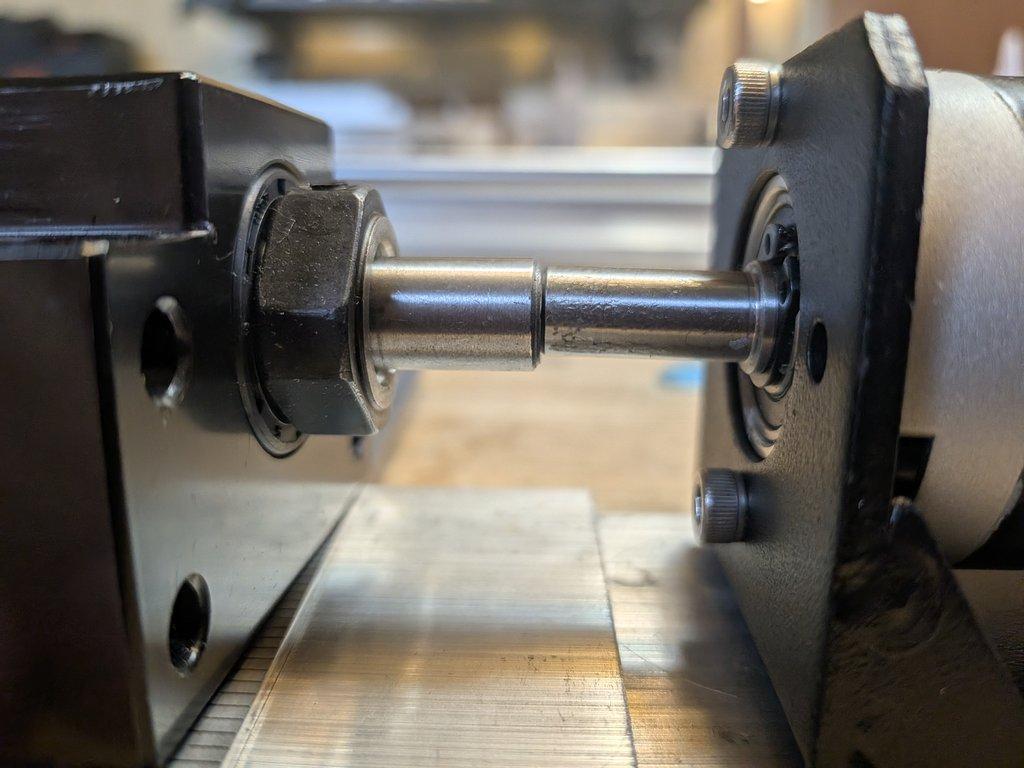
This is one of those moments where you’re not just assembling—you’re adjusting the system to itself. The spacer becomes the correction that brings the mechanical chain into agreement: motor → coupling → ball screw → pivot → boom
⸻
Notes
This step rewards patience.
It’s tempting to just bolt things together and “see how it runs,” but taking the time to measure and check alignment before committing makes a big difference. Once you start drilling new holes or cutting material for spacers, you’re in destructive territory—you don’t get that material back.
So it’s worth slowing down:
- check shaft height
- check parallel alignment
- check how things sit under light pressure
Even a small misalignment here can show up later as:
- binding
- uneven wear
- vibration in motion
The spacer might feel like a minor part, but it’s doing critical work. It’s what allows the system to behave like a single, continuous axis instead of a chain of slightly off components.
⸻
LIMNMOCO Context
This is where the drive system starts to become real.
Up to now, the components have been mostly structural or positional. With the motor in place, you’re now defining how motion is actually delivered into the system.
The alignment between the motor and the ball screw is especially important because it sets the tone for everything downstream. If this interface is clean, the rest of the system has a much better chance of behaving predictably.
⸻
Why This Matters
Mechanical systems don’t tolerate misalignment very well, especially when you start adding power.
What might feel “close enough” by hand can become a problem once the motor is driving the system. Loads increase, tolerances tighten, and small errors get amplified.
Getting the shafts aligned and supported properly isn’t just about smooth motion—it’s about longevity and reliability.
And again, this is one of those places where the habit matters:
take the extra minute to measure before you remove material
Because once you cut or drill for that spacer, that decision is locked in.

Christopher Weinberg
Christopher Weinberg is the founder of LIMNMEDIA, where he develops motion control systems, production workflows, and educational tools focused on stop-motion and hybrid filmmaking. With over 15 years of experience in production, his work centers on making complex techniques more accessible through practical engineering and open development. He is currently building LIMNMOCO, a modular motion control system designed for flexible, real-world use.
No comments yet. Login to start a new discussion Start a new discussion