LIMNMEDIA - Boom Arm Modification & Ball Screw Clearance
This stage focuses on modifying the boom arm to better integrate with the drive system
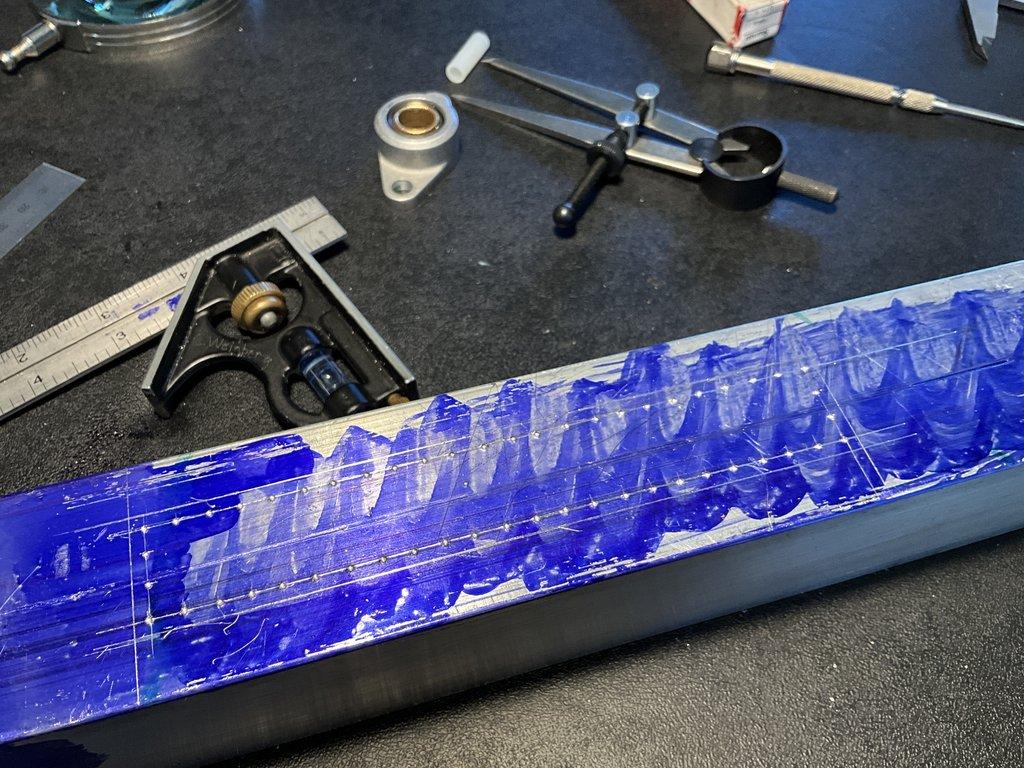
The pivot shaft location is moved so the bearings mount directly to the boom arm, and a large slot is cut to allow the ball screw to pass through for actuation.
This is where the design shifts to match the reality of how the system wants to move.
⸻
Objective
The goal here is to:
- relocate the pivot shaft mounting to the boom arm
- create clearance for the ball screw drive
- allow full, unobstructed motion through the system
⸻
Process
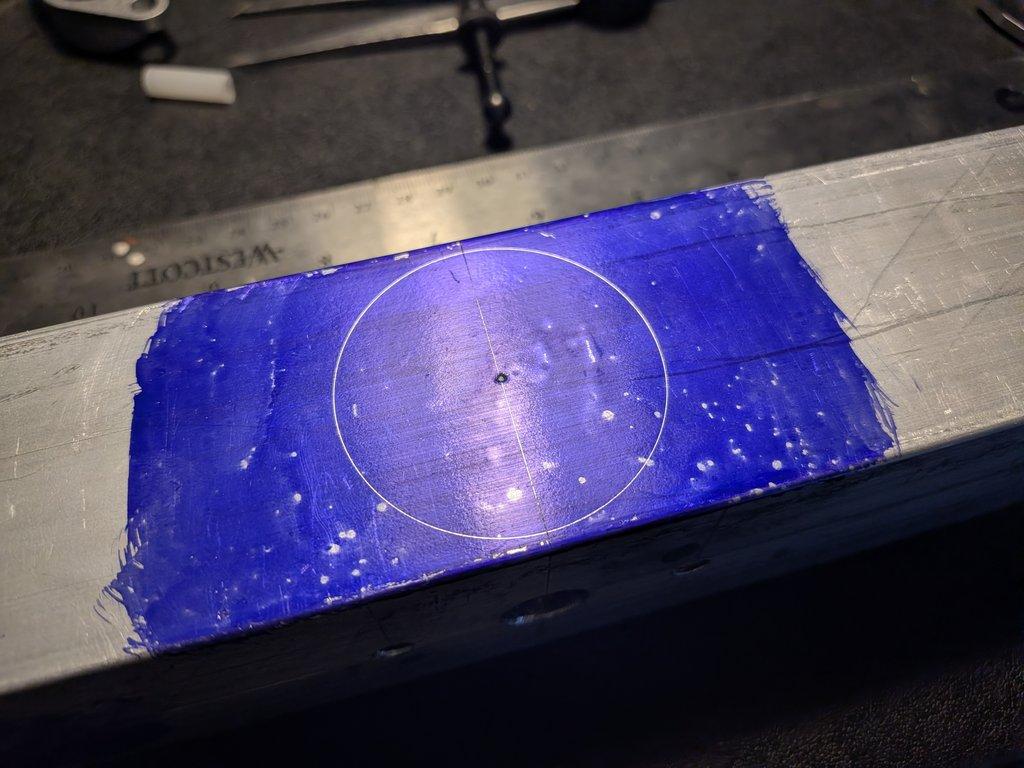
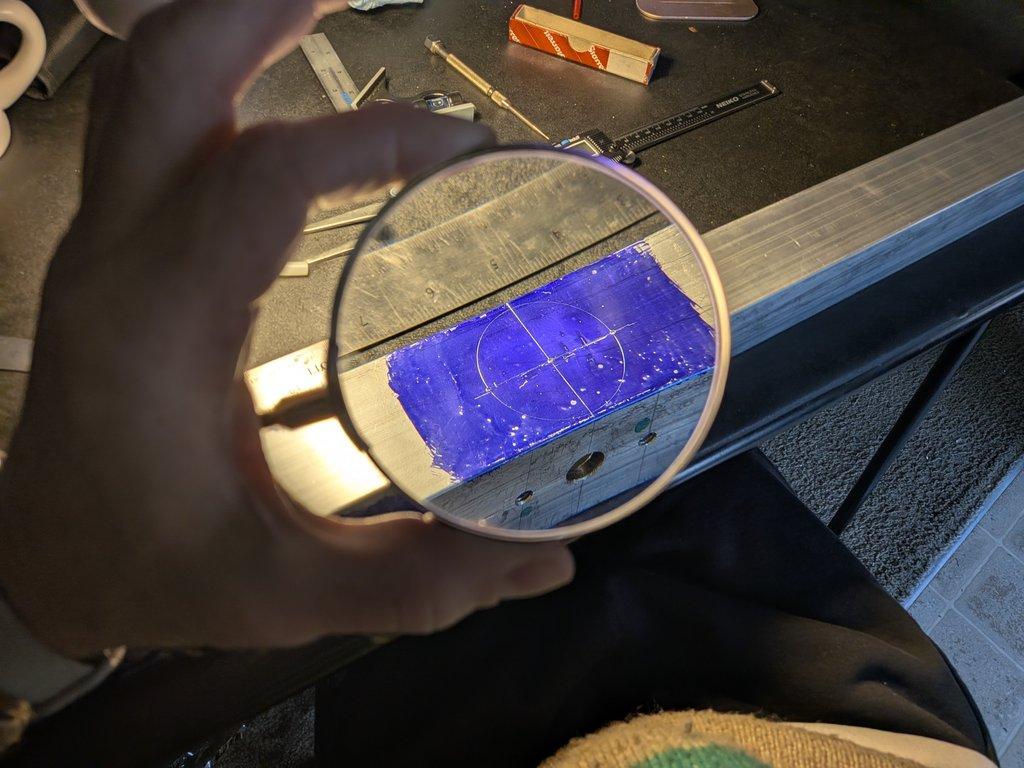
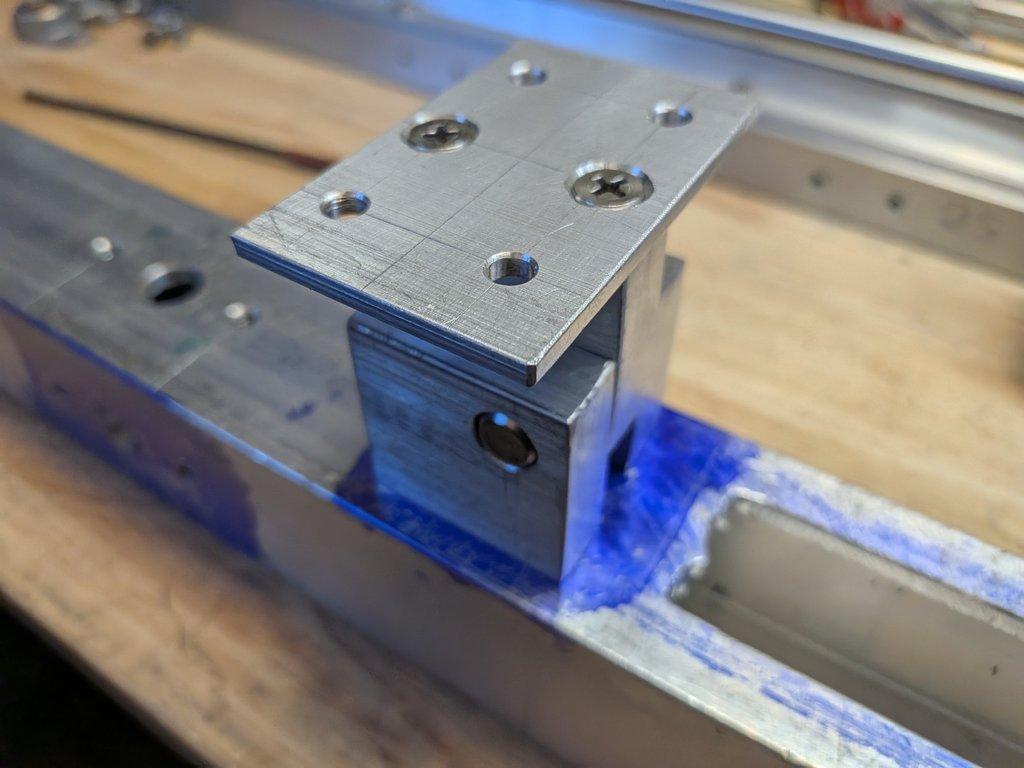
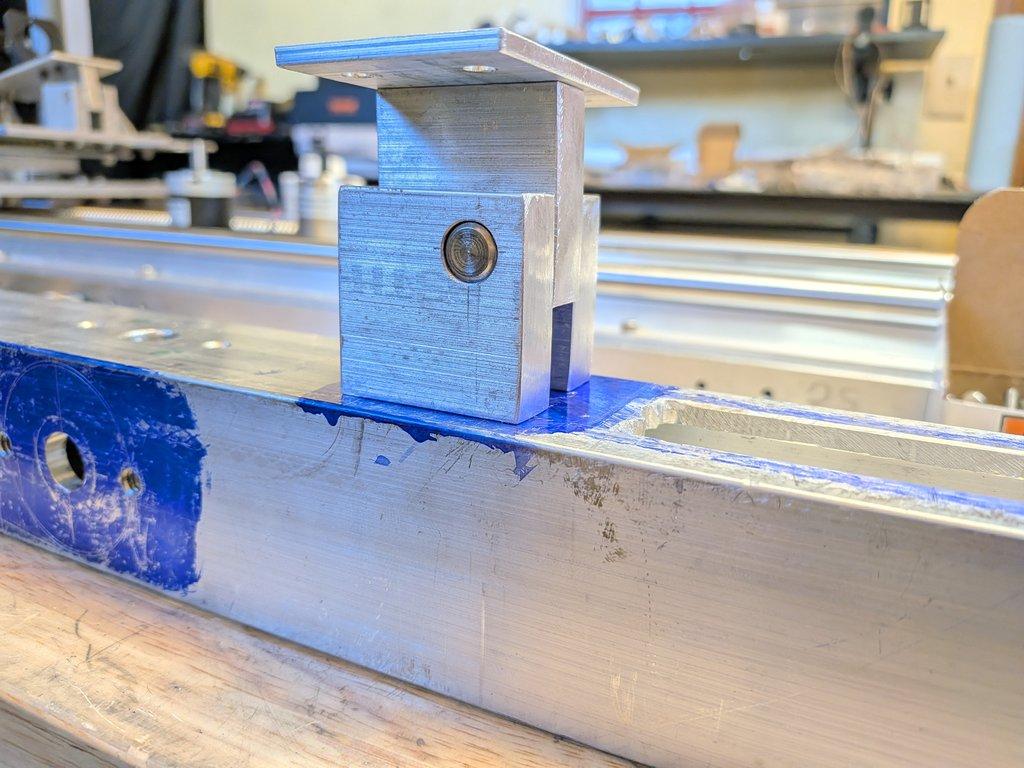
New holes are drilled into the boom arm to receive the shaft that supports the bearings. This moves the pivot interface from the uprights onto the boom itself, tightening up the geometry and simplifying the connection.
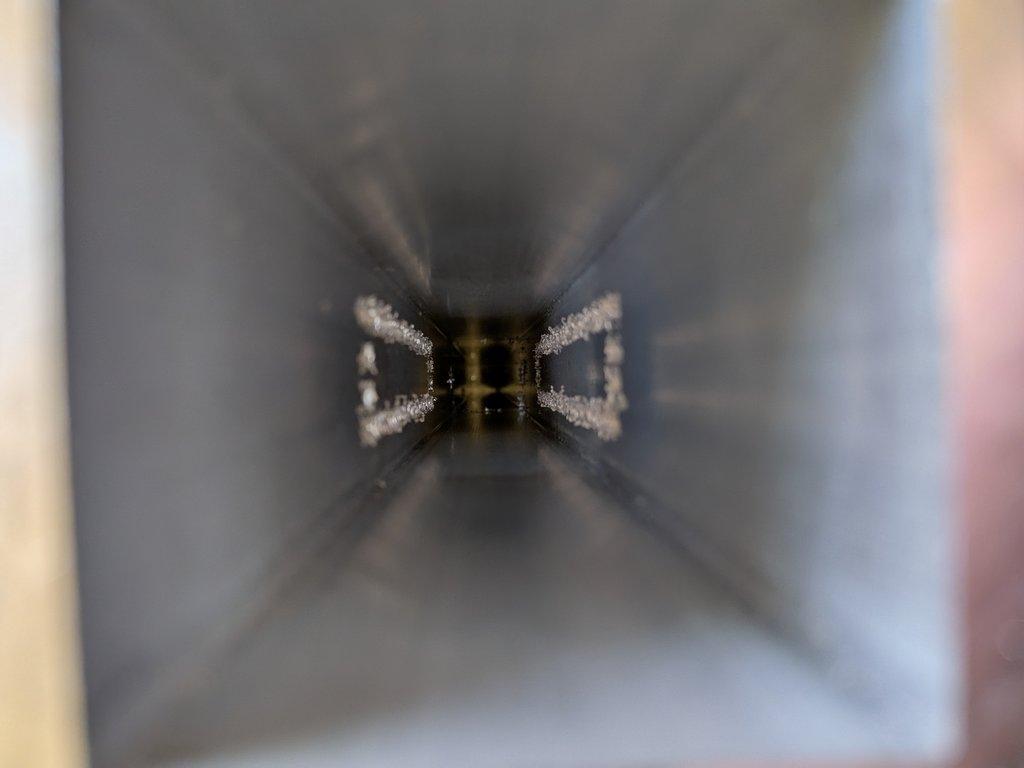
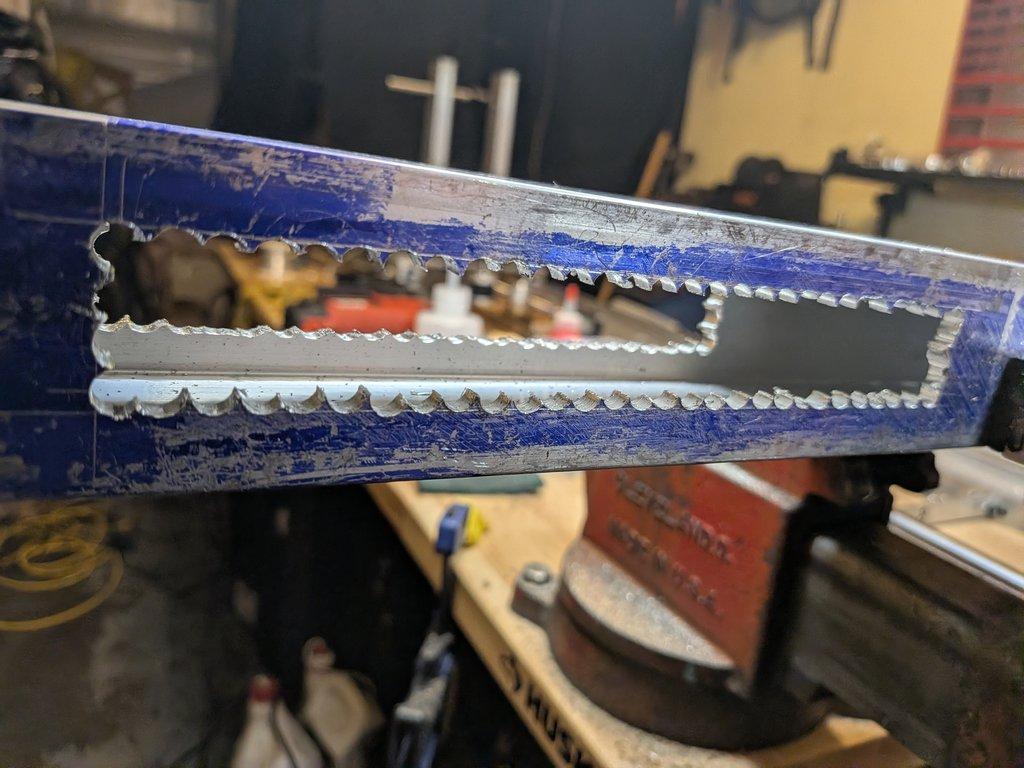
To accommodate the ball screw, a large slot is cut into the boom arm. This allows the screw and its moving components to pass up through the arm as it travels.
To accommodate the ball screw, a large slot is cut into the boom arm. This allows the screw and its moving components to pass up through the arm as it travels.
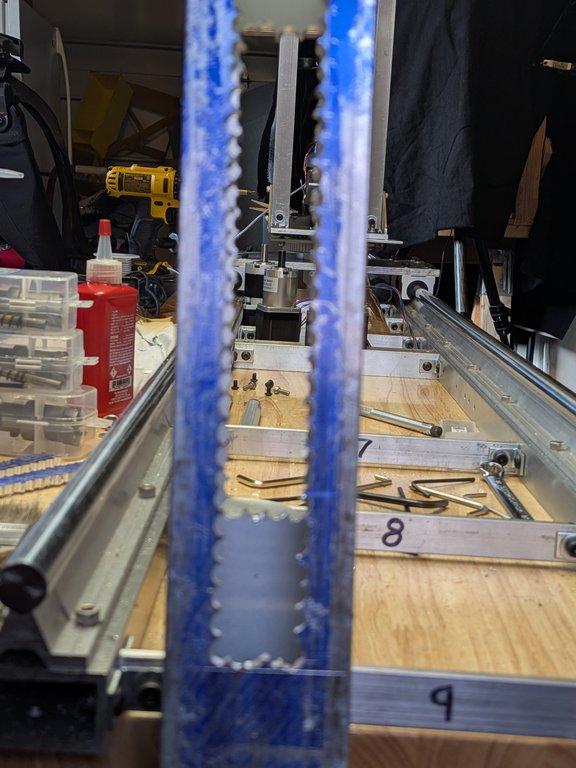
The slot is made using a straightforward method:
- a series of holes are drilled along the length of the cut on the drill press
- the remaining material is removed
- the shape is refined and cleaned up with a file
It’s a simple approach, but it works—and it keeps the process accessible without specialized tools.
⸻
Notes
This is a good example of adapting the design to the system rather than forcing the system to match the original plan.
Moving the bearing mount onto the boom arm changes how loads are carried and simplifies the pivot relationship. It also makes the assembly feel more direct and connected.
The slot is doing critical work. Without it, the ball screw would interfere with the boom’s movement. With it, the drive system can operate through the full range.
Cutting a slot like this with just a drill press takes a bit of patience. The row-of-holes method isn’t the fastest, but it’s reliable and controllable. Finishing with a file gives you the chance to dial in the shape and remove any sharp transitions.
And again, this is destructive work. Once that material is gone, it’s gone. So it’s worth checking:
- the path of the ball screw
- the full range of motion
- how much clearance is actually needed
before committing to the cut.
⸻
LIMNMOCO Context
This modification tightens the relationship between:
- the boom arm
- the pivot system
- the ball screw drive
It’s another step toward making the system feel integrated rather than assembled.
The ball screw now interacts directly with the boom in a clean, intentional way, allowing linear motion to translate into controlled rotation without obstruction.
⸻
Why This Matters
Physical systems often reveal their constraints only after parts come together.
This is one of those moments:
the design becomes clearer through modification
The ability to adjust, remove material, and refine geometry is what allows the system to evolve into something that actually works.
It also reinforces an important idea: you don’t need perfect tools—you need a clear understanding of what the system requires.

Christopher Weinberg
Christopher Weinberg is the founder of LIMNMEDIA, where he develops motion control systems, production workflows, and educational tools focused on stop-motion and hybrid filmmaking. With over 15 years of experience in production, his work centers on making complex techniques more accessible through practical engineering and open development. He is currently building LIMNMOCO, a modular motion control system designed for flexible, real-world use.
No comments yet. Login to start a new discussion Start a new discussion